When you build a website, you want it to attract as many eyes as possible. You may not have a large budget for paid advertising like Google Ads. So many online businesses look for other options, like search engine optimization (SEO).
SEO helps businesses achieve a prominent position on SERPs (search engine results pages). However, as a site owner, a question should come to mind: what is the best way to do SEO? As you may know, one effective way to approach SEO is through keyword research. However, you should know what keyword research is and how it works to reap SEO benefits in the right direction.
This blog post answers the query, “what is keyword research,” and covers factors to keep in mind while researching keywords.
What is Keyword Research?
Keyword research helps users identify and examine the terms and queries people use when searching for information, products, or services online. To research potential keywords, highlight popular search queries, assess their relevance to your content or business, and evaluate the competition for ranking for those keywords.
When you include valuable, relevant keywords and terms in your content, you offer better answers and a better user experience for your target audience. To rank better on search engines, creating helpful, valuable content is crucial. Proper keyword research can lead to better content and improved rankings and traffic on SERPs.
Keywords, Keyword Combinations, and Queries
A search query, or query for short, has one or more keywords typed into a search engine. You need to incorporate keywords into your content; similarly, you can add one or more keywords. When we denote ‘keyword,’ this means one or more keywords.
Why is Keyword Research Crucial for SEO and AI Search?
Keyword research is important for SEO and AI visibility as it answers:
- What questions your audience is asking
- What language they use to explain their problems
- Which solutions they compare and assess
- Where they stand in the buying journey
Knowing which keywords to target helps you create content that meets demand instead of guessing what might help your website. By matching search intent and resolving what users want, you can help them toward meaningful actions like purchases, sign-ups, or demo requests. This can help your business make a profit.
How Has Keyword Research Changed?
Keyword research has changed for all the right reasons in three ways:
Volume-First to Business Value-First
AI search features and tools help capture high-volume keywords before users think about visiting your site. Advanced keyword research prioritizes keywords that drive brand awareness or conversions directly.
Google-Only to Search Everywhere
Target audiences have many options for searching. They can use Reddit, Amazon, ChatGPT, and more. Keyword research must help businesses detect where their audience searches.
Query Matching to Prompt Research
Users can use longer, more specific prompts with AI tools than with traditional search. Moreover, keyword research should facilitate these conversational, intent-rich prompts.
Factors to Consider When Researching Keywords
When researching specific SEO keywords for your website, consider factors that can affect your ranking potential. These factors are:
Relevance
Your keyword ideas should match your product, service, or website content. As you may be aware, Google focuses on relevance when matching search intent. So be transparent and honest with yourself about how closely a keyword relates to your brand.
Search Volume
SEO professionals study search volume data to discover the words and phrases users search for. That said, you need to strike a balance. This is because the most searched keywords are hard to rank for. Moreover, it is not advisable to target high-volume keywords if your chances of ranking for them are bleak.
Keyword Difficulty
The keyword difficulty (KD) metric indicates how hard it is to rank on the first page of search results for a specific keyword. If multiple established, large websites target that keyword, it gets a high difficulty rating.
Authority
Google assesses a website’s or author’s authority on a topic when it ranks pages. In this situation, try to rank for keywords you or your brand can explain or handle expertly.
Trends
Some keywords become popular due to seasonality or news events. Consider what’s trending, but keep in mind that as trends change over time, keywords may lose volume. Your chosen keywords should relate to the trend and reflect your business; otherwise, don’t follow the trend.
Localization
If your audience is local to a particular city or region, try focusing on location-specific keywords. A few general keywords can also return localized results.
Types of Keywords to Research
Keywords are partitioned into two categories based on search volume:
Seed Terms
Seed terms are also called head terms. These act as broad keywords that many people search for. Searchers have different intents, so results are often mixed.
Long-Tail keywords
These keywords comprise three or more words and have lower volume than seed or head terms. Long-tail keywords matter because they catch people further along in the buying cycle and likely convert at higher rates.
Keywords are also divided into two categories based on their relationship to your brand:
Branded: These keywords include your brand name.
Nonbranded: These keywords do not include your brand name. However, they relate to your business.
In short, your basic keyword research should have a combination of these categories. As a result, you can create clusters of latent semantic indexing (LSI) keywords that include phrases related to one of your core keywords.
The Ideal Keyword Research Process
Keyword research is a highly fruitful process that can guide you toward long-term success. Tried-and-true techniques, creative thinking, and the right tools can make a big difference in visibility, rankings, and profitability. The keyword research comprises the following steps:
Step # 1: Brainstorm Topics and Seed Keywords
This first step begins with brainstorming topics and seed keywords. In this scenario, think like a potential customer with a challenge that can lead them to your business. Also, try to guess what they might type into a search engine.
For instance, you manage an e-commerce store that is famous for selling coffee beans. What can users search for when they plan to shop for coffee online? They can begin their research by typing “best coffee beans”.
Instead of relying on instinct, use a free tool like Google Analytics to see which terms have increased organic traffic to your site. Keep this information in mind when you think about more keywords.
Step # 2: Use Tools to Discover Related Keywords
Once you have a starting list of keywords, use a keyword research tool to identify related queries. You can update your existing website copy with relevant ones, or you might get inspired to create new content targeting them.
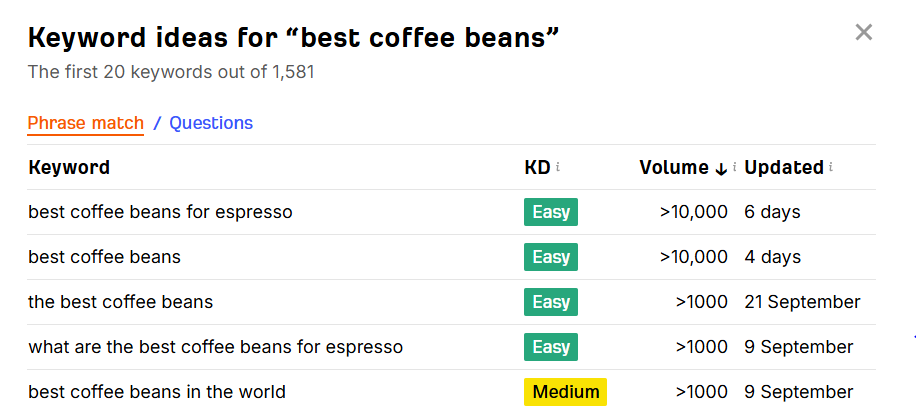
Luckily, some free keyword research tools are available. That said, they are limited in functionality. For more powerful tools, you will need to pay.
Additionally, sophisticated tools use artificial intelligence (AI) to group related keywords into topical clusters. This helps you target numerous search terms with a single website page.
Step # 3: Check Your Competitors
Your competitors can help you with your keyword research. Most keyword research tools let you see which keywords competitor websites rank for. You can organize the list by share of traffic to see which keywords drive the most traffic to their websites. These keywords should be your main targets to boost your business.
Step # 4: Prioritize Keywords and Identify SEO Opportunities
Once you have done thorough research, you can use your keyword list to develop content. If you don’t have ample time and resources for content creation, focus on keywords with the highest monthly volume, low keyword difficulty, and strong relevance to your business.
For example, a local bakery should focus on “best sourdough bread Denver” instead of a general phrase like “sourdough bread.” The former works well because it is more specific and easier for the business to rank for.
Don’t underestimate these tactics, as they help build the foundation of your SEO strategy.
Step # 5: Implement Your Target Keywords Throughout Your Website
Once you create your priority keyword list, try to include them naturally across your website. Also add tasks like optimizing page title tags, product descriptions, image alt text, blog content, meta descriptions, and category pages.
Avoid stuffing your web pages with so many keywords. This practice, called keyword stuffing, doesn’t help you rank higher on SERPs. Unfortunately, it can hurt your rankings. Therefore, your primary goal is to develop useful content that offers value to readers. Follow Google’s guidelines to create helpful content.
Top Keyword Research Tools
Different keyword research tools can support and improve your SEO process and help you increase organic traffic to your website. These tools include:
Semrush Keyword Magic Tool

You can use the Semrush Keyword Magic Tool to generate a wide range of keyword ideas. It also helps you find search volume and competition data. It also lets you retrieve keyword metrics, including keyword difficulty, monthly search volume, and search intent.
Ubersuggest

With Ubersuggest, you can conduct comprehensive keyword research by discovering keyword ideas and suggestions, search volume, and difficulty.
Ahrefs

Ahrefs helps you with detailed keyword metrics like search volume and keyword difficulty. This is one of the best keyword research tools for optimizing your keyword research.
Wrapping Up
We hope you liked our blog post explaining the query “what is keyword research”. It is a process of identifying the words and phrases current or potential customers use when searching online.
It also helps examine the volume and competition of those terms. This helps you include the most relevant, contextual, and impactful terms in your site copy, helping you appear in SERPs. Use results-driven keyword research tools to optimize your SEO efforts and gain the visibility and conversions you want.
FAQs
What is a keyword example?
A keyword example is a word or phrase such as “best chocolate cake recipe” or “running shoes” that users type into a search engine to discover information.
How do I learn SEO as a beginner?
As a beginner, you can learn SEO (Search Engine Optimization) by studying core concepts from official guides, setting up a practice website, and mastering free tools.
What is SEO?
SEO, or search engine optimization, is the process that makes your site prominent in search engines like Google and generative AI platforms like ChatGPT. SEO helps users find you when they search for your product or service.
Is the Google Keyword Research tool free?
Google offers an official keyword research tool, Google Keyword Planner. You can use it for free. However, you should have a Google Ads account to use it.
What is keyword research in digital marketing?
Keyword research in digital marketing helps you discover the phrases your target audience types into search engines and generative AI platforms to find information about products and services. Keywords help you describe your business efficiently to your current or potential audience. Moreover, you can show how your business differs from other businesses in the same industry.