
As someone who does a job in operations, marketing, or revenue, you might have heard about API integrations lately and how they have become more impactful in what you do. In simple words, you may have witnessed a phrase, “What is API Integration?” while using the internet.
APIs are code-based instructions that enable a wide range of software components to interact with one another. If you view APIs as the building blocks of contemporary applications, API integration is like the mortar that practically holds them together.
This blog post will describe the term “What is API Integration?”, its use cases, examples, and how they actually work.
What is an API Integration?
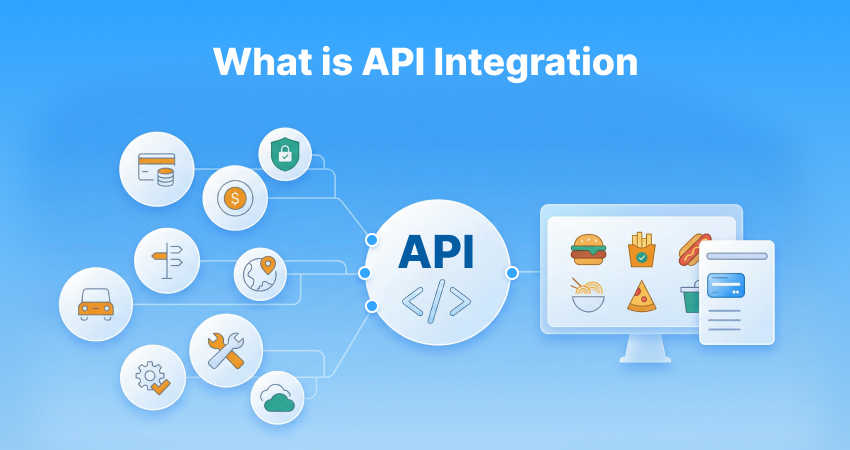
An API integration ensures a smooth connection between two or more applications via their APIs, enabling them to exchange data. API integrations power processes across various high-performing businesses, keeping data in sync, improving productivity, and driving revenue.
What are API Integration Services?
API integration services enable APIs to connect to numerous services, systems, and databases. Doing so helps them exchange data and functionality automatically and seamlessly.
What is an API?
An API (Application Programming Interface) is a combination of protocols and rules that help distinct software applications to exchange data and communicate efficiently. APIs typically work like messengers or intermediaries, enabling one program to request services or information from another without knowing the other program’s internal workings.
What are the Types of APIs?
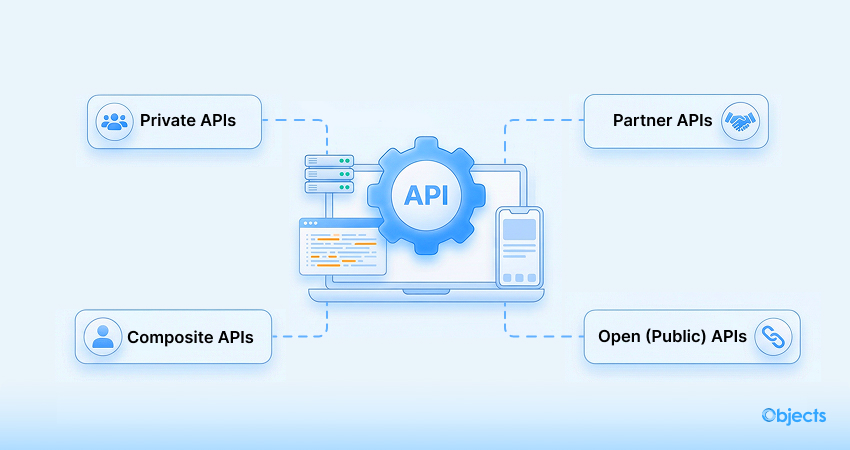
Depending on the audience and architecture, we can easily categorize APIs. Based on the audience, there are different types of APIs, including:
- Open (Public) APIs
- Partner APIs
- Private APIs
- Composite APIs
Open (Public APIs)
These APIs are available to outsiders, such as developers. However, they have some limitations, but they help developers scale the business ecosystem. The Google Maps and GitHub APIs are notable examples.
Partner APIs
These APIs can only be exchanged with authorized businesses and external parties. For instance, a travel website and an airline can use partner APIs to boost particular B2B operations.
Private APIs
You can call private APIs the internal APIs. These APIs help connect internal systems, such as HR and payroll, within a company or firm. Moreover, they may be used internally.
Composite APIs
What makes these APIs different from other APIs is their exclusivity: they combine multiple service calls or data into a single API request, enhancing performance and streamlining operations that rely on information from multiple sources.
Based on architecture or protocol, five key types facilitate advanced software integrations suitable for different use cases. These types of APIs include:
- Rest APIs
- SOAP APIs
- GraphQL APIs
- grPC APIs
- WebSocket APIs
Rest (Representational State Transfer) APIs
These are among the most commonly used web service APIs, known for their simplicity, scalability, and flexibility. They use standard HTTP methods like GET, POST, PUT, and DELETE, and JSON for data.
SOAP (Simple Object Access Protocol) APIs
SOAP APIs are widely used in enterprise-level applications in healthcare and finance. They are known for strong security and formal error handling.
GraphQL APIs
GraphQL APIs are built on a data query and mutation language that enables clients to request the data they want in a single call. This helps reduce under-fetching and over-fetching of data.
grPC APIs
grPC APIs typically serve as a top-notch, open-source framework that uses binary data (Protocol Buffers) instead of HTTP/2. These APIs are extensively used for optimized, internal microservice communication.
WebSocket APIs
WebSocket APIs are popular for providing real-time, bidirectional, and consistent communication channels over a single TCP connection. They are valuable for applications, such as stock tickers or live chat.
How API Integration Works?
Fortunately, you can integrate APIs in various ways, but as a developer, you should first consider your options and needs. This way, you can create and implement a plan in the right direction. For instance, you can consider using an SDK (software development kit) or a library for an API you want to integrate with.
As you may know, SDKs provide users with reusable code snippets that are crucial for tasks such as request handling, response parsing, and authentication, ultimately streamlining the integration process.
Being a developer, you can create custom code to expedite an integration. However, it is a time-consuming activity that is prone to risks.
What are the benefits of API integration?
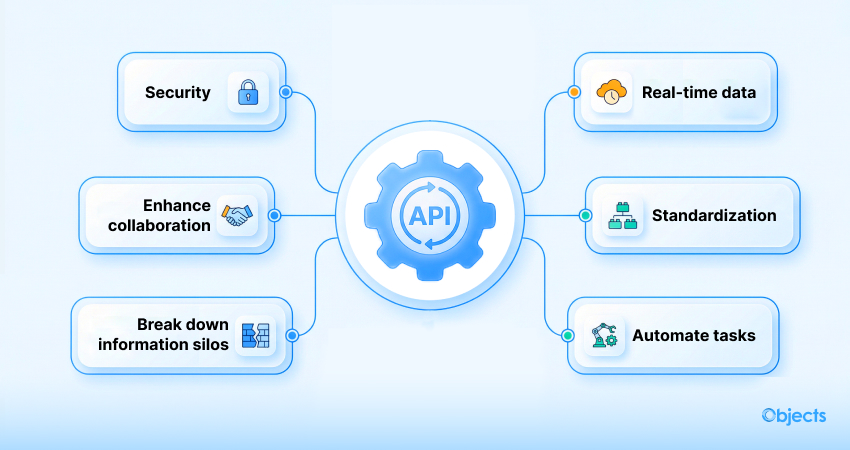
APIs offer many benefits, making them significant tools for users and developers alike. Here are a few crucial benefits:
- Reduce development time: Rather than developing everything from scratch, APIs let you leverage existing functionality, saving time and resources.
- Automate tasks: API integrations help automate repetitive tasks and simplify workflows.
- Break down information silos: API integrations ensure data and functionality sharing across systems and applications.
- Enhance collaboration: API solutions assure seamless integration between external partners and internal teams.
- Real-time data: APIs process data in real time, ensuring up-to-the-moment information from integrated sources.
- Standardization: API integration solutions provide a common framework for applications to communicate, simplifying development and maintenance.
- Security: Through well-designed API integration solutions, businesses can ensure secure access controls and data protection mechanisms.
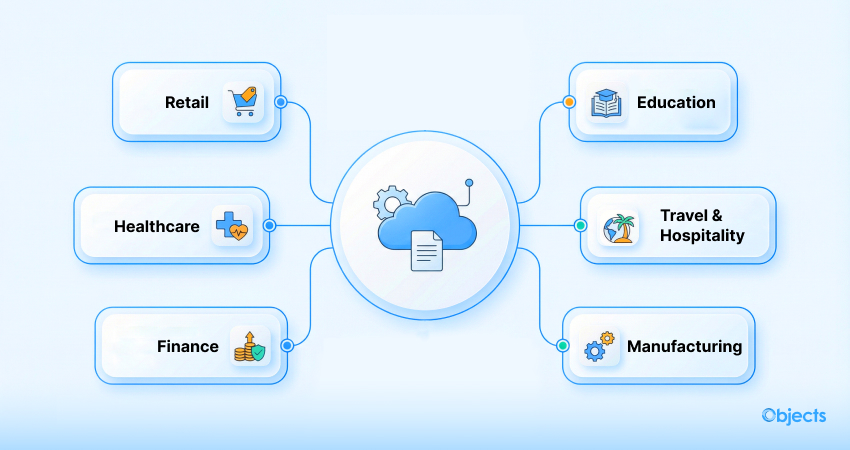
API Integration Use Cases According to Industry
Retail
Through API integration, businesses can connect their physical store systems to their online stores. This ensures that everything is up to date in real time across inventory, customer data, and transactions.
Healthcare
The advantage of an API integration is that it helps medical professionals share patient records, such as lab test results, reports, and doctors’ prescriptions, with the relevant departments. This guarantees stronger patient care and improves the overall impact of healthcare.
Similarly, the role of an API integration is particularly useful in a prominent healthcare setting, such as telehealth. For instance, API integration enables data exchange between Electronic Health Records (EHRs) and telehealth platforms. This way, hospitals can smartly enhance the scope of patient care and increase efficiency, resulting in improved workflows such as billing and scheduling.
Finance
If we specifically discuss the contribution of API integrations in finance, it helps improve the relationship between various services, such as payment systems and banking.
API Integration solutions have a significant impact on finance. That’s because they help streamline workflows and reduce operational costs, while simultaneously improving security and expanding the provision of new digital services.
Travel and Hospitality
API integrations also play a decisive role in integrating hotel management, booking systems, and flight information. This confirms that existing and potential travelers can effortlessly obtain flight information in real time. Likewise, they can book trips at any time. Additionally, they can get other useful services like car rentals all in one place.
Education
In education, API integrations have facilitated students and educational institutions, including schools, colleges, and universities. For instance, schools can easily manage student records and other crucial digital resources, providing students with specialized learning opportunities.
Once API integration solutions connect learning platforms to student records and online resources, schools can effortlessly perform the above tasks and monitor students’ performance and learning aptitude.
Manufacturing
API integrations connect supply chain platforms or services and inventory with production systems. As a result, you can sync inventory levels, production levels, and other crucial aspects of the manufacturing process, bringing them up and running.
What are a Few Examples of API integrations?
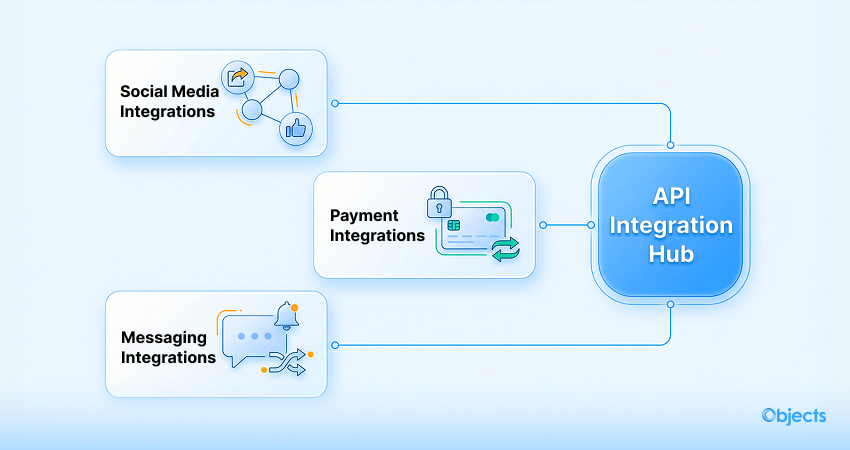
API integrations exist everywhere and power the digital experiences, which allow users to perform their jobs, travel, make payments, and interact with one another. To understand how they work, consider the following examples:
Social Media Integrations
A wide range of applications integrate with social media sites or services, such as Facebook, X (formerly Twitter), and LinkedIn, to leverage content sharing, promote to their target consumers, and scale brand engagement efforts.
For example, a digital marketing company can help with social media integrations, making it easy for users to share blog posts or articles on X (formerly Twitter) or LinkedIn, thereby amplifying exposure.
Payment Integrations
Payment integrations help e-commerce brands and stores process customer payments seamlessly and securely via third-party platforms such as Square or Stripe. These API integrations are handy because they ensure the secure and seamless transfer of important customer data, including debit or credit card numbers.
This helps remove risk by confirming compliance with regulatory standards without needing teams to waste resources and time.
Messaging Integrations
Integrations with social interaction platforms, such as Twilio and Slack, allow teams to enhance and streamline necessary workflows. For instance, development teams may combine their Slack and APM tools to receive automated messages concerning issues, such as elevated latency.
FAQs (What is API Integration – Types and Examples)
What is the Most Common API?
There is no single most common API, as its use varies by industry and use case. However, some widely used APIs include the Google Maps API, the Stripe API, and APIs from Salesforce, Microsoft, and social media platforms.
Do All Apps Use APIs?
Approximately 99% of mobile apps largely depend on APIs to function properly. This means that almost every app on your phone is reliant on APIs. Whether you order food, send a message, or check the weather, your mobile app constantly communicates with other systems directly or indirectly via an API.
Is ChatGPT an API?
ChatGPT is an OpenAI brainchild that primarily serves as an advanced AI chatbot. OpenAI provides an official API for ChatGPT (specifically via the GPT-3.5 Turbo and GPT-4 models), helping developers integrate ChatGPT’s NLP-powered AI capabilities into their applications.
Wrapping Up
We hope you enjoyed our blog post on API integration. If you want to know the answer to the query,” What is API integration?”, this blog post is for you. API integrations connect the components of your tech stack, enabling them to communicate and exchange data seamlessly.
They’re also crucial because automated workflows across integrated applications via APIs can bypass time-consuming manual labor, seamlessly shift data that relies on manual input, and incur versioning issues, enabling you to do more of the important work you wish to do rapidly.