
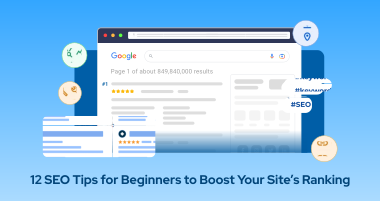
Search engine optimization (SEO) is a productive digital marketing tactic that helps a site attain better ranking on search engine results pages (SERPs).
As you know, SEO is technically applicable to all search engines. Unsurprisingly, given Google’s market dominance or interference, it is often colloquially referred to as “Getting to the top of Google.”
And, practically, it works the same way: using keyword-oriented, top-notch content, SEO helps boost relevant traffic to your site.
You don’t need to be a genius as a beginner to discover why getting to the first page of results often helps. After all, when was the last time you looked at the second page of Google results? Therefore, knowing SEO tips for beginners is crucial in this situation.
Previously, SEO was a simple process focused on using relevant, appropriate keywords for your domain. Over time, indexing algorithms have evolved, incorporating multiple facets—such as authority, editorial quality, and content quality—so SEO tactics have had to adapt to keep pace.
This blog post outlines 12 SEO tips for beginners.
Best SEO Tips for Beginners in 2026
1. Take Advantage of a Keyword Strategy

The first SEO tip and the most key aspect of SEO is enhancing your content with appropriate phrases and keywords. These must create a delicate balance between your target audience’s search behavior and your business’s offering.
Do you know that Google’s algorithms benefit from these keywords to decide what your content is about and how best to index it? Yes, it is true.
Exploring the best keywords (those with high search volume and low competition) requires a robust strategy.
As a beginner, there are two key categories you may think about: short-tail keywords (which are typically one or two keywords long and cover topics broadly) and long-tail keywords that are three, four, or more keywords long, and are more specific but have a lower search volume.
2. Stay and Focus on the Topic
Next up, focus on your content’s topic. If you target the best car hire companies in Ireland in your content, for instance, your keywords must follow something like this: ‘cheap or budget-friendly rental cars in Dublin’.
If you go off on a tangent, concentrating on trains, coaches, or jet ski hire, you’ll eventually rank for the unwanted keywords. In addition, if users click away from your content because it is irrelevant, it will adversely affect your search rankings.
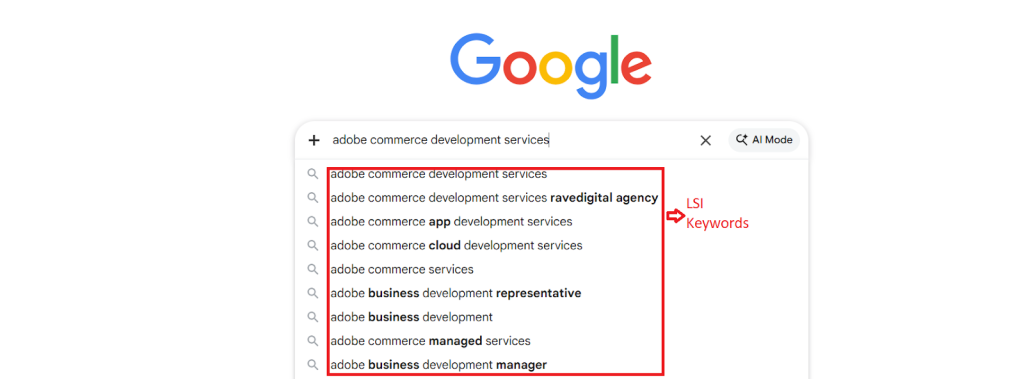
You should be aware of a useful technique called latent semantic indexing (LSI).
Simply put, LSI comprises algorithms that crawl a website to examine which words (or groups of words) usually appear together. You can benefit from them for topic matching or to detect themes in your content.
If you want to beat your competitors through high-class and helpful content, you can hire content writers who can create content that helps improve your search engine rankings.
3. Prioritize Long-form Content
Longer content performs well on Google than shorter content. Google by hook or crook acknowledges this. The exact definition of long-form content is unclear.
We should not forget that Backlinko didn’t find any direct correlation between search rankings and content length.
That said, it makes sense, as long-form content offers more opportunities to add backlinks and keywords than shorter content. It also offers readers more valuable information than a shorter snippet would, which should motivate them to spend time on your site.
Remember, it is not only about length (editorial quality and plagiarism also influence it). Keep this aspect in your mind when you devise your SEO strategy.
4. Maintain a Steady Stream of Content
Developing fresh yet unique content keeps your site up-to-date with the latest information and allows you to beat your competitors to the first spot.
More importantly for SEO, it informs Google that your website is still active.
For an algorithm, inactivity means fewer visitors, which can lead to lower rankings.
Developing a steady stream of high-quality, long-form content is challenging, especially for smaller marketing teams.
You should plan a six- to 12-month schedule for upcoming materials to stay ahead of the curve. There are other approaches, too.
For instance, if you don’t have a budget to hire a team of copywriters, you can invest in a couple of high-quality guest bloggers instead. These should be notable people in your industry with substantial authority in the field.
This way, you can share content as much as possible on social media and boost your overall domain authority.
Regardless of the approach you follow, the key is to be consistent by regularly publishing new content. In reality, delighting users with new and updated content is arguably one of the best SEO tips for websites.
5. Update Outdated Content and Avoid Topics that Date Quickly

Freshness is one of the most influential ranking factors for Google’s algorithms. However, as noted, it can also be challenging to maintain a steady stream of fresh or updated content. One solution is to freshen existing content regularly.
In this scenario, you should evaluate old posts, update them with the latest information, and republish them. This only needs to be done twice or three times a year and will enhance your content’s SEO without requiring you to create anything new.
Another tip is to add the year in the title. For instance, “The best car hire companies in Ireland” could be upgraded with fresh data and republished as “The best car hire firms or companies in Ireland in 2026”.
On the other hand, you should not use content or copy that becomes outdated. Additionally, news references or commentary to transient events help boost responsive marketing on social media; they’re less helpful for SEO. That’s because they are usually six months or a few weeks old.
Moreover, if the content is outdated or stale, it will likely receive fewer hits—and, again, this negatively affects your rankings. When following the SEO beginner’s guide, remember to update old or stale content regularly.
6. Develop a Sitemap & Robots.txt File
A sitemap is a file that lists the content and pages on your site and how they relate to one another. You might have scrolled to the bottom of a web page and wondered what it was for.
Interestingly, users typically don’t navigate websites using sitemaps, but sitemaps are beneficial for SEO. As an example, check out the website’s sitemap. It indicates that it is not created for human consumption.
That said, it informs web crawlers of the website’s content and guides them to updated or new pages.
Moreover, for good basic SEO, you should include a robots.txt file. While a sitemap informs web crawlers regarding your site’s content, robots.txt files offer instructions on which pages to crawl and which to avoid.
As you may be aware, robots.txt and sitemaps provide simple SEO suggestions that enable Google to rank new or fresh content quickly.
And because these files are neatly placed on the backend of your site, they help improve your SEO without impacting the human experience.
7. Hire An SEO Marketing Company

If you don’t want to apply SEO tactics to improve the visibility of your business yourself, do not worry. Fortunately, you can take advantage of a leading SEO marketing company that helps drive traffic to your site and achieve desired yet measurable results.
At Objects, we help businesses with different volumes to rank their sites on search engines through our powerful SEO (search engine optimization services).
8. Use SEO-friendly Metadata
Metadata helps explain web page features such as headings, titles, subheadings, and page-level descriptions on your site. As with sitemaps, much of this data is hidden on the backend and not visible to users.
That said, metadata is key for allowing web crawlers to determine information about every page on your website and how to rank and index it. Hence, it is crucial to optimize this content.
For instance, you can improve your titles by ensuring they have the primary keywords for that page. You should also incorporate these keywords in the meta descriptions (the content users mostly see under the headings on the search results page).
That said, before using SEO-friendly metadata, you should know what SEO is. This way, you can benefit from SEO tips for beginners in the right way.

Note that there are optimal lengths for each metadata field. Page headings, for instance, should contain approximately 60 characters. As a result, they are not truncated on SERPs. Lastly, do not overlook the importance of optimizing your URLs.
Per Google’s advice on URL structure, you must use easy, explainable words and skip applying long ID numbers and specific characters, like underscores.
9. Optimize All Images
Placing images in your content makes it more useful and meaningful for readers, breaks up the copy, and adds a little pizazz to your articles or blogs. However, web crawlers often struggle to navigate image content. It’s therefore necessary to use correct alt text.
Alt text, another kind of metadata, is the written copy that appears when an image doesn’t load online.
As for text, it is always there, even if you cannot view it, and it allows search algorithms to index content.
Furthermore, it is a reliable SEO suggestion, as it increases the likelihood of your image appearing in Google Image Search and drives more traffic to your site.
Most importantly, alt text is necessary for accessibility. E-readers are software that reads and interprets website content aloud to visually impaired web users, including alt text. Your alt text should always be human-friendly and accurately describe the image.
Last but not least, don’t use special characters. E-readers convert these to code as long strings of numbers, and reading them aloud can be annoying for visually impaired users.
This is why we have included an image-optimization tip in our SEO beginners’ guide.
10. Build a Link-building Tactic
Another metric that contributes to a website’s ranking is its domain authority. Undoubtedly, understanding domain authority is one of the prime SEO tips for websites, since it gauges a site’s relevance to a specific topic or subject area.
Additionally, it accounts for several factors, including the perceived prestige of a website and its authors, the competitiveness of the content, and information quality.
One way to improve your domain authority is to deploy a link-building strategy. From a digital marketing point of view, you can consider three categories of links:
- Internal links: These link your domain’s content, creating an interconnected web that signals to crawlers which pages on your site are most important and how they relate to one another.
- External links: Linking to authoritative, relevant, and related external pages can also improve your rankings (if those pages rank highly).
- Backlinks: When external domains link to your website, it signals to search algorithms that your content is authoritative and high-quality.
Link building is one of the best SEO tips for beginners.
11. Refrain from using Black Hat Techniques
You should not use black-hat techniques to rank your content on search engines. This is against the SEO’s ethics. These tactics help SEO executives manipulate Google’s algorithms. This way, they can potentially improve the site’s search engine ranking. However, this is an artificial way to boost search engine rankings in the short term.
Avoiding black-hat approaches is one of the result-oriented SEO tips for websites that will also work in the future.
12. Use Social Media to Boost SEO

Social media doesn’t directly affect search rankings, but it can indirectly influence them. Websites, including Facebook, Twitter, TikTok, Instagram, LinkedIn, and other social media channels, can increase your site’s traffic and gradually enhance your rankings. As one of the leading SEO suggestions, social media can help you leverage your SEO efforts upward.
This is one of the most fruitful search engine optimization tips for beginners and seasoned users alike.
What is SEO?
If you do not know what SEO (search engine optimization) is, no worries. Search engine optimization helps users enhance their sites to increase their ranking and visibility on search engines.
By improving content, technical structure, and authority (e.g., backlinks), SEO enables search engines like Google to rank sites accordingly.
We hope you now understand what SEO is.
Search Engine Optimization Services Market Size
- The search engine optimization (SEO) services market size has surged to $92.74 billion in 2025.
- It will reach $203.83 billion in 2030, with a 17.1% compound annual growth rate (CAGR).
Wrapping Up
This completes our list of 12 simple yet impactful SEO tips for beginners. There’s no doubt that SEO is a huge domain, powered by a big and booming industry in its own right.
That said, there is always more you can do; applying practically even a handful of these SEO tips will let you reach where you want to be: to the top of Google!